
- Raymond mill processing calcium oxide
- Raymond Mill for Processing Clay
- Ore grinding mill
- Fluorite grinding mill
- Correct Operation of Raymond Mill: A Complete Guide for Efficiency and Safety
- Vertical grinding mill processes calcium carbonate
Telephone:
+86-18290113988 (whatsapp) Kase
+86-13248239223 (whatsapp) Cecilia
+86-17317879223 (whatsapp) Fandi
+86-19921225405 (whatsapp) Luna
Email:sales@shcronus.com
Raymond Mill for Processing Clay
- Publication time:2026-01-23
- Click:113
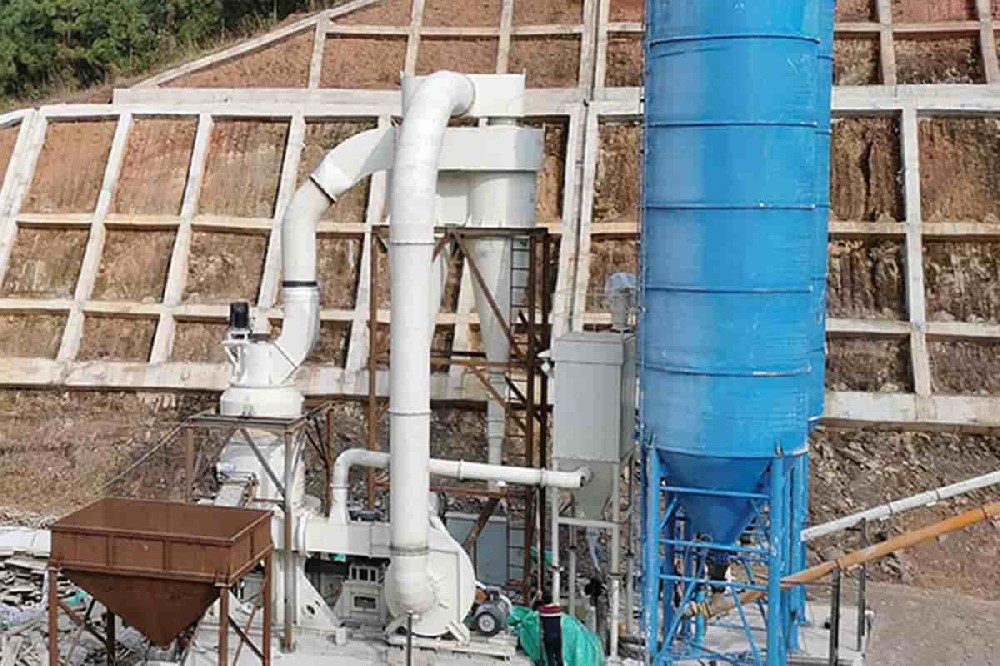
Raymond Mill and Clay
Clay, as a valuable natural resource widely distributed across the globe, plays a significant role in numerous fields such as ceramics, construction materials, papermaking, and chemical industries due to its unique physical and chemical properties. However, natural clay in its unprocessed state, characterized by high moisture content (typically 15%–25%) and viscosity, cannot directly meet the stringent requirements of various industries regarding particle fineness, uniformity, and stability. This poses a major obstacle in the processing and utilization of clay. The high moisture content tends to cause adhesion and clogging within the grinding chamber, classifier, and pipelines of the Raymond mill, significantly reducing grinding efficiency and increasing maintenance efforts. Additionally, the poor flowability of damp powder easily leads to bridging blockages in cyclone collectors and discharge outlets, which not only disrupts continuous production but also results in uneven fineness of the final product, thereby constraining the full potential of clay.
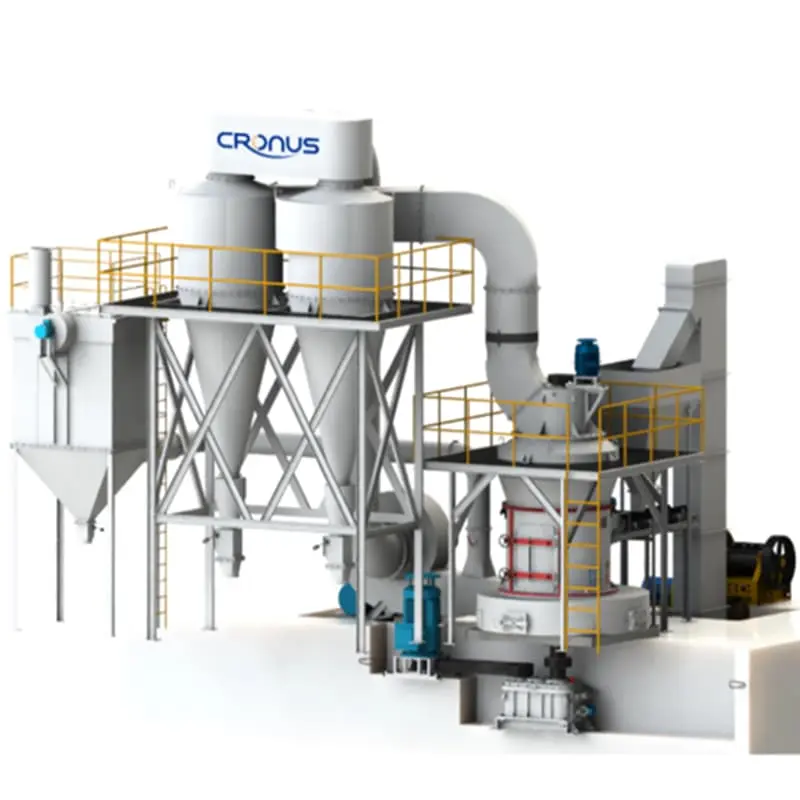
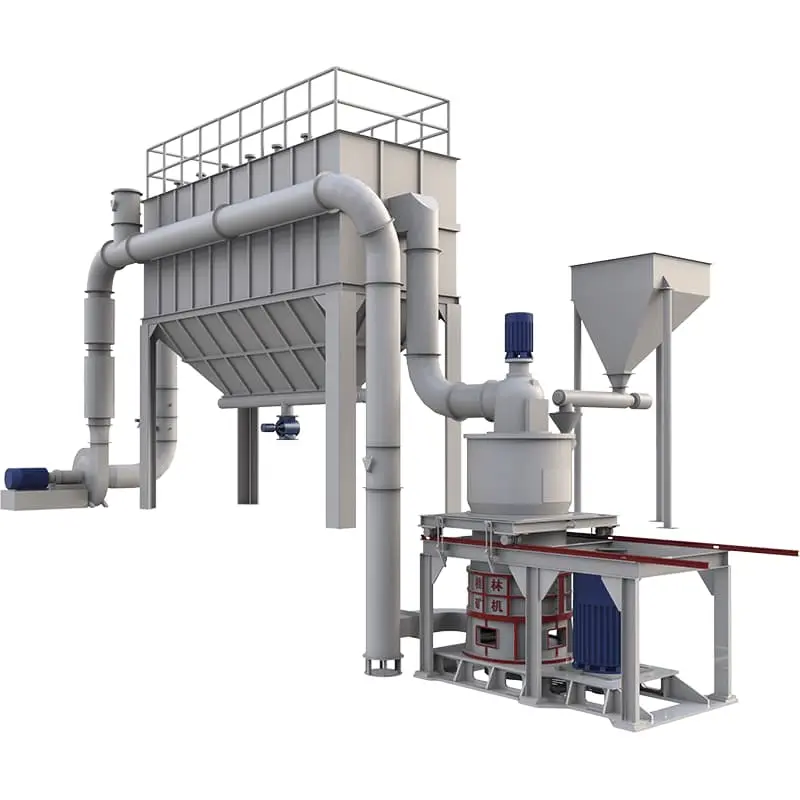
Process Flow of Clay Processing with Raymond Mill
Pretreatment
Natural clay has high moisture content, and the moisture content before grinding must be controlled below 6% (ideally < 3%). Otherwise, it can easily clog the equipment. Common drying methods include rotary dryers and airflow dryers. When the moisture content is not excessively high, a hot air furnace can also be used for drying during grinding. After drying, the clay is initially crushed using a jaw crusher to achieve a particle size of ≤30 mm, ensuring uniform feeding. The initially crushed material is then conveyed to a storage silo via a bucket elevator, guaranteeing a continuous and stable supply into the grinding process.
Grinding and Classification
The material is uniformly fed into the main unit of the Raymond mill via an electromagnetic feeder. The grinding rollers and grinding ring work in coordination, while the shovel blade transports the material. Under the rolling pressure of the grinding rollers, the clay is pulverized. Adjusting the main unit parameters is crucial. For clay, the grinding roller pressure can be appropriately reduced, and the rotational speed of the classifier controls the fineness of the final product. The precise screening by the classifier ensures uniform particle size of the clay powder processed by the Raymond mill. In the ceramics industry, clay powder with uniform particle size promotes a denser body structure, reduces defects, and improves product quality and yield.
Collection and Dust Removal
The cyclone collector utilizes centrifugal force to gather the finished product, while the pulse dust collector purifies the exhaust air. The pulse cleaning device removes dust from the filter bags, achieving a balance between environmental protection and efficiency.
Applications of Raymond Mill in Clay Processing
Ceramics Industry
In the production of ceramic bodies, clay powder with uniform particle size facilitates molding and ensures the quality of the body. In glaze applications, it provides good suspension and stability, resulting in aesthetically pleasing and durable ceramic surfaces.
Refractory Materials
The clay powder processed by the Raymond mill is an important raw material for producing refractory materials, such as refractory bricks and crucibles. It can withstand high temperatures, protect equipment, and extend service life.
Papermaking Industry
Used as a coating, it fills the pores of paper, enhancing print clarity and color saturation. As a filler, it increases the whiteness and opacity of paper, improving its physical properties.
Construction Materials Industry
It adjusts performance in white cement production, plays a key role in ceramic fiber production, and enhances properties such as hiding power in exterior wall coatings.
Chemical Industry
In plastic production, it improves strength and reduces costs. In rubber product manufacturing, it enhances performance. In paint production, it improves properties and lowers costs.
Summary
The Raymond mill transforms natural clay into high-value-added industrial powder through efficient grinding and precise classification, serving as a key technological engine that drives its core applications across multiple fields such as ceramics, refractories, papermaking, construction materials, and chemical industries.
- Previous:Raymond mill processing calcium oxide
- Last:Ore grinding mill

Telephone:
+86-18290113988 (whatsapp) Kase
+86-13248239223 (whatsapp) Cecilia
+86-19921225405 (whatsapp) Luna
+86-19921221418 (whatsapp) Li
Email:sales@shcronus.com
Back to Home

©2024 Shanghai Cronus Machinery Co,.ltd. All Rights Reserved. 沪ICP备2024089773号-1 XML地图
向下滚动页面显示"置顶"按钮...